




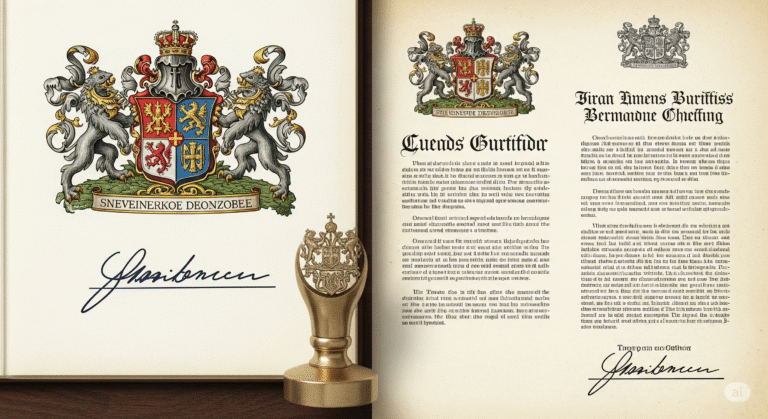
If you plan to study, work, or move to another country, you'll need to submit translated official documents.
However, not every translation is legally valid.
There is a specific service required by national and international authorities: the certified translation.
It ensures that the translated document has legal validity.
In this guide, you'll learn:
- What Is a Certified Translation?
- When it is required
- How the process works
- Which documents require this service?
- How to Hire Safely
What Is a Certified Translation?
A certified translation has legal validity recognized by public and private institutions.
Certified public translators perform this type of work.
In Brazil, these professionals must pass a competitive exam and register with the Board of Trade.
In this way, they ensure the authenticity and legal validity of the translated documents.
Courts, universities, consulates, and government agencies accept certified translations as official documents.
Therefore, in formal proceedings, this is always the correct format.
When a certified translation is required
This type of translation is required whenever a foreign document needs to be valid in another country.
In addition, it is also required when Brazilian documents must be presented abroad.
Common examples include:
- Birth, Marriage, and Death Certificates
- Degrees and Transcripts
- Contracts and Business Transactions
- Medical documents and clinical reports
- Powers of attorney, court decisions, and judgments
International Validity and the Hague Apostille
Many countries, such as Brazil and Portugal, are parties to the Hague Convention.
This means that some documents require not only a certified translation but also a Hague Apostille.
The correct order is:
- Issue the original document
- Add notes, when necessary
- Translate with a certified translator
- Validate in the destination country
As a result, the document will be accepted in other countries without any additional red tape.
Who Can Provide a Certified Translation
Only qualified and officially recognized professionals may perform certified translations.
In Brazil, this role is filled by certified public translators who have passed a competitive examination.
In countries such as Portugal or Hong Kong, the process varies.
However, it always involves certifications, legal oaths, and formal registrations.
⚠️ Warning: translations done by agencies or freelancers without accreditation have no legal validity — even if they're well-made.
Documents That Most Often Require Certified Translation
| Document Type | Usage scenario |
|---|---|
| Birth Certificate | Visas, citizenship, residency |
| Diploma and Transcript | University enrollment or course validation |
| Marriage and Divorce | Citizenship through marriage, civil registration |
| Contracts | Starting a business, international agreements |
| Passport / ID Card | Proof of identity in courts or at companies |
| Medical Statements | Medical visas, immigration procedures |
| Court rulings | Legal proceedings, child custody, inheritances |
How a Certified Translation Is Done
The process follows strict criteria for accuracy and formatting.
Here's how it works:
- Analysis of the original document
- Faithful translation, preserving the official structure
- Including Comments on Stamps and Signatures
- Signature and stamp of the certified translator
- Physical or digital delivery, as required by the country
As a result, every detail of the document retains its legal validity.
Digital or printed translation
With advances in digital technology, many countries now accept electronic certified translations.
They use ICP-Brasil or European certificates.
However, documents that must be physically submitted to courts or notary offices still require a printed copy.
Therefore, always confirm the required delivery method in advance.
How much does a certified translation cost?
The price depends on the language, the amount of text, the country, and the urgency.
- In Brazil, the Commercial Registries set prices in a publicly available price list.
- In Portugal and other countries, prices are set freely but follow market standards.
💡 Tip: Be wary of prices that are too low.
As a result, you may receive a document that is not legally valid.
How to Choose a Certified Translator with Confidence
- Verify registration with the Board of Trade or the appropriate government agency
- Confirm your experience with this type of document
- Insist on a contract, a receipt, and confidentiality
- Verify the signature using an official stamp and/or digital certificate
- Choose professionals who also provide guidance on the Hague Convention
This way, you ensure security at every stage of the process.
Why Hire Jana Büchi
Jana Büchi is an expert in certified translation in the following languages: Portuguese, English, Spanish, Italian, Mandarin, and Cantonese.
In addition, it offers:
- Translations accepted by consulates and international courts
- Certification with an Oath of Declaration in Hong Kong
- Experience in medical, legal, and business translation
- Ethical, professional, and culturally sensitive service
👉 Contact us to request a quote.
Conclusion: A valid translation is more than just translating
A certified translation is essential for validating your background, your rights, and your plans in other countries.
It ensures safety and prevents future problems.
Choosing a certified, experienced, and ethical translator goes beyond a legal requirement.
In practice, it brings peace of mind in both personal and professional matters.
Whether you're planning to study, get married, start a business, or move abroad, trust those who know what they're doing.
Do you need translations for visas, academic purposes, or legal proceedings? Contact Jana Büchi.