



Have you ever heard of the Hague Apostille? If you're in the process of moving to another country, applying for dual citizenship, studying abroad, or conducting international business, this term is likely to appear in your documents.
But what exactly does it mean? When is it required? And what is the relationship between the Hague Apostille and a certified translation?
In this comprehensive article, we’ll explain:
- What is the Hague Apostille?;
- When and why it is required;
- Which documents need to be apostilled;
- How the process works in different countries;
- And how to safely hire the right service.
The goal is for this content to serve as a reliable resource both for those initiating international proceedings and for companies and law firms that handle cross-border documentation.
See Also: CNJ – National Council of Justice (Apostille certification in Brazil)
Ministry of Justice (Portugal)
What is the Hague Apostille?
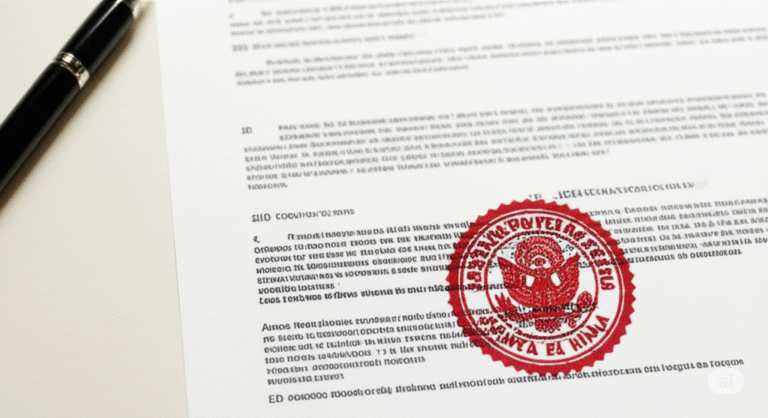
The Hague Apostille is a certificate of authentication international, issued by signatory countries to the 1961 Hague Convention, with the goal of to certify the authenticity of public documents for use abroad.
In other words, it is an official seal or stamp that certifies that a national public document (such as a certificate, diploma, or court judgment) is authentic and can be accepted by foreign authorities, without the need for additional consular legalization.
The Hague Apostille does not certify the content of the document, but rather the signature, seal, or stamp of the issuing authority.
What is the Hague Apostille used for?
The purpose of the workbook is eliminate the requirement for consular legalization among the member countries of the Hague Convention. Before the treaty, documents had to be authenticated in several steps at different consulates—a lengthy and bureaucratic process.
With the handout, the process becomes more straightforward and efficient. Once issued, the document is ready for use. in the destination country, provided that the other party is also a signatory to the Convention.
Examples of use:
- Enrollment in educational institutions abroad;
- Certification of civil records (birth, marriage, death);
- Recognition of diplomas and qualifications;
- International marriage;
- Citizenship or residency applications;
- Commercial contracts with foreign companies;
- Judicial or administrative proceedings in another country.
Which countries are parties to the Hague Convention?
More than 120 countries are parties to the Hague Convention. Among them are:
- Brazil
- Portugal
- Spain
- France
- Germany
- Italy
- United Kingdom
- United States
- Canada
- Australia
- Japan
- Argentina
- China (with restrictions in certain regions)
- Hong Kong and Macau (with their own governments)
It is essential to check whether the issuing country e the destination country are covered by the Convention. Otherwise, a traditional consular legalization process will be required.
Which documents can be apostilled?
Just public documents are eligible to receive the Hague Certificate. This includes:
Accepted documents:
- Birth, marriage, and death certificates;
- Degrees, transcripts, academic certificates;
- Documents issued by notary offices and notaries;
- Court rulings, decisions, and court documents;
- Administrative documents issued by government agencies;
- Documents notarized by a notary public.
Documents not accepted directly:
- Private documents without a notarized signature;
- Uncertified copies;
- Simple translations;
- Documents on informal paper or with a digitally signed signature that is not internationally recognized.
What is the difference between apostilling the original document and the translation?
Here's a frequently asked question: Is it the original document that needs to be apostilled, or the translation?
The answer is: It depends on the destination country and the intended use. In many cases, both must be apostilled.
Common situations:
- The original document is apostilled in the country of origin.
- A certified translation is performed by a certified translator.
- Translations must also be certified (if done on paper and signed with a notarized signature or a certified digital signature).
In the case of Jana Büchi, who provides official and certified translations, Both the original document and the translation can be prepared in accordance with the requirements of the destination country, guiding the client through each step.
What is the process for obtaining the Apostille?
The process varies by country, but it usually follows similar steps:
In Brazil:
- Go to an authorized notary office (usually a notary public's office);
- Present the original document;
- Request an apostille;
- Pay the corresponding fee (between R$ 90 and R$ 150, on average);
- Receive the document with a physical or digital stamp.
In Portugal:
- The handout can be requested at the Ministry of Foreign Affairs or at registry offices;
- In some cases, it is also possible to submit a request electronically (with a qualified digital signature).
In Hong Kong:
- The service is provided by the High Court;
- An appointment is required; items must be dropped off in person and picked up later;
- Payment of the fee in local currency;
- The service also covers documents issued in Macau, depending on the case.
Does the Hague Apostille replace a certified translation?
No. They are complementary processes.
- A The Hague Apostille certifies the original document.
- A A certified translation converts the content into another language and is legally valid.
Many agencies require that both documents are apostilled, particularly in cases involving dual citizenship, immigration, and academic credential evaluation.
How much does it cost to obtain the Hague Apostille?
Costs vary:
| Country | Approximate amount (per document) |
| Brazil | R$ 90 to R$ 150 |
| Portugal | €10 to €20 |
| Hong Kong | HK$ 125 to HK$ 150 |
| United Kingdom | £30 |
| U.S. | US$ 20 to US$ 60 (depending on the state) |
It is recommended that you confirm the current amounts with the relevant notary’s office, registry office, or court at the time of your request.
Get a quote Here!
How long will it take to receive it?
The average time it takes to issue the certificate is 1 to 5 business days, and may vary depending on:
- Volume of requests;
- In-person or online;
- Country-specific requirements.
In urgent cases, some services offer 24-hour shipping, for an additional fee.
How can JL Nissi help?
A JL Nissi, directed by Jana Büchi, features:
- Comprehensive consulting services regarding the Hague Apostille and certified translation;
- Official translations in up to 5 languages with international experience;
- Personalized service for Brazilians in Portugal, China, Hong Kong, Macau, and other regions;
- Customer support from the moment the request is made until the final delivery of the document accepted abroad;
- Guidance on consular certification, when the Workbook does not apply.
Conclusion
A The Hague Protocol It is an essential step in ensuring the international validity of documents. Whether you’re studying, working, starting a business, or applying for immigration, this international certificate makes it easier to have your documents accepted without red tape.
However, it is important to understand that the Workbook does not replace the official translation. To ensure that everything complies with legal requirements, it is essential to have a qualified professional and clear guidance on international procedures.
If you’re in the middle of this process or about to begin it, turn to those with experience, technical expertise, and cultural sensitivity to support you every step of the way.
Want to know if your documents need a Hague Apostille?
Contact our team and receive personalized, fast, and secure guidance.